

Introduction: A Common Tesla Conundrum
As a proud Tesla owner, you're accustomed to cutting-edge technology. From over-the-air updates to a massive infotainment screen, your car is constantly evolving. But you've probably noticed a nagging thought while driving at night: "Why don't my headlights feel as advanced as the rest of the car?"
You might have heard whispers of "matrix headlights" or "adaptive high beams" and wondered why your vehicle seems to lack these sophisticated features. You flick on your high beams, only to manually switch them off to avoid blinding an oncoming driver, thinking, "Shouldn't a car this smart handle this on its own?"
This is a common point of frustration and confusion for many Tesla owners, especially those in the United States. While your car is equipped with the physical hardware for a more advanced lighting system, its full potential remains locked away. The reason? A complex web of historical regulations and the slow-moving gears of government approval. In this in-depth guide, we will unravel this mystery, explaining what matrix headlights are, why they've been restricted in the US, and what the future holds for this highly anticipated feature.
What Are Matrix Headlights and How Do They Work?
Before we dive into the regulations, it's essential to understand what matrix headlights are and why they are so revolutionary. Unlike traditional headlights, which have a single beam (low or high), matrix headlights are a network of individually controllable LEDs. Imagine a grid of tiny light sources, each of which can be turned on or off in a fraction of a second.
The Magic of Dynamic Lighting
This individual control allows the headlight system to function with incredible precision. A camera mounted on the car's windshield detects the environment, including other vehicles, pedestrians, and road signs. The car's onboard computer then processes this information in real-time, instructing the headlights to create a dynamic light pattern. For instance, the system can:
- Mask Out Oncoming Traffic: By turning off only the specific LEDs that would shine directly into the eyes of an oncoming driver, the system can keep your high beams on without causing glare. The rest of the road remains brightly illuminated.
- Light Up Pedestrians and Signs: The system can dynamically brighten specific areas, such as a pedestrian on the side of the road or a sign, drawing the driver's attention to potential hazards.
- Follow the Road: Some systems can slightly adjust the beam's direction based on steering input, providing better illumination around corners.
In regions like Europe, this technology has been a game-changer, offering enhanced safety and a more relaxing night driving experience. This sophisticated functionality is what many Tesla owners see glimpses of in their car's hardware and wish they could use.
The US Regulatory Roadblock: Why You’re Left in the Dark
For decades, the United States has had a federal standard for automotive lighting that has prevented the widespread adoption of true matrix headlights. This regulation, known as Federal Motor Vehicle Safety Standard No. 108 (FMVSS 108), stipulated that a vehicle's headlights must have distinct "low beam" and "high beam" settings. Critically, these settings were required to be either fully on or fully off, without any dynamic, selective dimming or "masking" functionality. This strict binary approach effectively outlawed the advanced, granular control that makes matrix headlights so effective. You can read the detailed Final Rule on the U.S. Federal Register website.
The Rationale Behind the Rule
The original intent of FMVSS 108 was a matter of simplicity and safety. Regulators wanted to ensure that any driver could easily understand and operate their headlights. The idea was that a simple low/high beam switch was the safest and most reliable method to prevent glare. However, as lighting technology evolved, this rigid rule became a major obstacle to innovation, leaving US drivers with less advanced lighting than their counterparts in other parts of the world. This regulatory gap meant that for years, despite car manufacturers being ready with the technology, US consumers were left out.
NHTSA's Rule Change: A Beacon of Hope?
The turning point for automotive lighting in the US came in 2022. After years of petitions from automakers and consumer safety groups, the National Highway Traffic Safety Administration (NHTSA) finally updated FMVSS 108 to allow for the use of Adaptive Driving Beam (ADB) headlights. The final rule, published in February 2022, officially permitted the use of headlight systems that can automatically adjust to the traffic environment. For more information, you can check the NHTSA's press release on the final rule.
What the New Rule Allows
The new regulation allows for lighting systems that can "automatically change the beam pattern in response to the detection of the presence of other vehicles to continuously provide the high beam pattern in areas of the road that are not occupied by the vehicles." This is a monumental shift that directly enables the core functionality of matrix headlights. The rule also specifies performance requirements to ensure these systems don't cause excessive glare for other drivers, a key safety concern.
Why Haven't We Seen an Update Yet?
While the rule change was a huge victory, it wasn't an instant fix. There are several reasons why we haven't seen an immediate software update from Tesla (or other manufacturers):
- Testing and Certification: The new regulations come with a specific set of testing and certification requirements. Automakers must prove to the NHTSA that their ADB systems meet these new performance standards, which is a time-consuming process.
- Software Development: While the hardware is in place, the software to control it needs to be updated to comply with the new US regulations. This isn't as simple as flipping a switch; it requires extensive development, testing, and validation to ensure safety and reliability.
- Implementation Timeline: For a company like Tesla, rolling out a feature globally requires careful planning. They need to integrate the US-specific software into their global fleet updates, which can be a complex logistical challenge.
Tesla's Current Headlight Functionality: A Reality Check
So, if your Tesla isn't using its matrix headlights, what is it doing? Most US-market Teslas are equipped with an "Auto High Beam" feature. This is a basic system that uses the forward-facing camera to detect light from other cars. When it detects an oncoming vehicle or a car ahead of you, it will simply switch the entire high beam off, and then back on when the road is clear. This is a far cry from the dynamic, selective dimming of a true matrix system.
The Distinction is Key
The two systems are fundamentally different:
- Auto High Beam (Current US): The system is binary. It's either a full high beam or a full low beam. It turns the entire beam off to avoid blinding others.
- Adaptive Driving Beam (Matrix): The system is dynamic and granular. It keeps the high beam on but selectively dims only the specific LEDs that would glare into the eyes of other drivers, while illuminating the rest of the road.
Understanding this distinction is crucial to managing expectations. While the auto high beam is a useful feature, it is not the same thing as the advanced technology that the hardware is capable of.
The Hardware Is Ready, But the Software Is Waiting
A key point of interest for many Tesla enthusiasts is the hardware. The good news is that most newer Tesla models—including the Model 3, Model Y, Model S, and Model X—are built with the necessary matrix LED headlight hardware. This is often the same hardware used in European and other international markets where the feature is already active. This is why a future software update is a very real possibility, rather than a pipe dream that would require a hardware retrofit.
How to Check for Matrix Headlights
The easiest way for a Tesla owner to check if they have the matrix hardware is to look at their headlight projectors. The matrix LED headlights have a different visual design inside the housing. On many newer Model 3 and Model Y vehicles, for example, the matrix headlights have a single, prominent projector lens with a very clear, circular appearance. If you're unsure, online forums and VIN decoders can often provide more definitive information based on your vehicle's build date and specifications.
What the Future Holds for Tesla's Matrix Headlights
With the NHTSA rule change in place, the path to a fully functional adaptive headlight system in the US is clearer than ever. Tesla is known for its ability to push out new features via over-the-air (OTA) updates, so the anticipation for this particular update is high. It is no longer a question of "if," but rather "when."
Potential Benefits of the Update
Once the software update is released, US Tesla owners will enjoy a host of benefits:
- Enhanced Safety: Drivers will have better visibility at night, particularly on unlit rural roads, without compromising the safety of other road users.
- Reduced Driver Fatigue: The automated system reduces the need for manual high/low beam switching, making night driving less tiring.
- Increased Technological Parity: US Tesla owners will finally have access to a feature that their European counterparts have enjoyed for years, fulfilling the promise of the advanced hardware.
Conclusion: The Wait Continues, But the Future Is Bright
The journey to unlocking Tesla matrix headlights in the United States is a perfect example of how technology can outpace regulation. While the hardware has been ready for years, the legal framework was simply not in place to allow it to be used. The recent rule change by the NHTSA has cleared the most significant hurdle, but the process of certification and software deployment still requires time.
For now, US Tesla owners must be patient. But the fact that the hardware is already in your car means that a simple software update is all that stands between you and a truly revolutionary night driving experience. The future is bright, and soon, your Tesla's headlights will finally be able to shine to their full, dynamic potential.
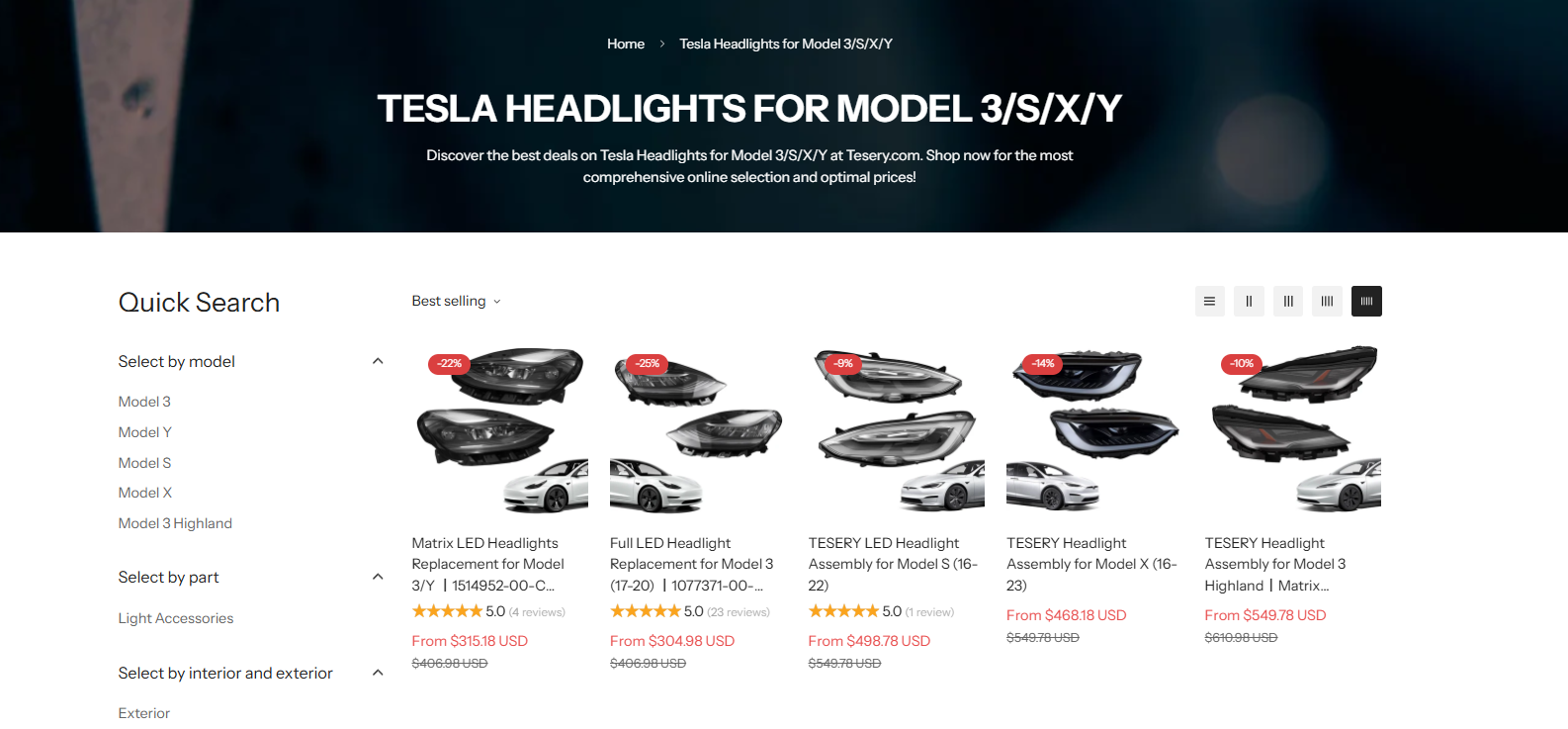
Explore Upgraded Tesla Headlights
Want a brighter, more modern look for your Tesla right now? Check out our collection of upgraded headlight assemblies designed to provide enhanced brightness and a stunning new design. No waiting for software updates—just a smarter, more stylish ride today.


